On July 14, U.S. Rep. “Bobby” Scott (D-VA)—the Chair of the Subcommittee on Crime, Terrorism, and Homeland Security—co-hosted a Congressional Forum with Reps. Mike Castle (R-DE), Carolyn McCarthy (D-NY) and Mike Quigley (D-IL). The forum was designed to explore the merits of H.R. 2324, the “Gun Show Loophole Closing Act of 2009.”
The “Gun Show Loophole” is a serious gap in our nation’s gun laws which allows individuals to buy firearms without undergoing a background check. Federal law mandates that all federally licensed firearms dealers (FFL’s) administer background checks to purchasers. In 37 states, however, the Gun Show Loophole allows “private sellers” who are “not engaged in the business of dealing” firearms to sell guns without processing background checks or keeping records of sale. The forum began with a series of undercover videos that illustrate how easily the Gun Show Loophole can be exploited. One video from the City of New York showed investigators buying firearms from private sellers at seven gun shows in three states. The city’s investigators conducted “integrity tests” where they told the sellers outright that they “probably couldn’t pass a background check.” Nonetheless, 19 out of 30 private sellers sold them guns anyway in violation of federal law. One private seller from Ohio was caught on tape bragging that he had sold 348 assault weapons in the previous year (no federal agency monitors private individuals’ income to determine if their principal source of livelihood is firearm sales). He then told the investigator not to worry about not being able to pass a background check, stating, “I don’t care ... I wouldn’t pass one either, bud.”
Those present then heard testimony from two panels of law enforcement officials, municipal officials, and gun violence survivors. Some of the most informative testimony came from Gerald Nunziato, a retired Special Agent with the Bureau of Alcohol, Tobacco, Firearms and Explosives (ATF). Nunziato worked for the ATF from 1970 to 1999 in Michigan, Ohio, Florida, Maryland and Washington, D.C. Nunziato’s extensive experience with illegal firearms trafficking investigations showed him that “gun shows are a major outlet for burglars to sell stolen firearms and a place for criminals to shop for the types of firearms they desire.” Nunziato observed that criminals frequently “sought out the known firearms traffickers who would go to gun shows to obtain the type of weapon they needed.” “Buyers at gun shows have a huge selection of firearms and the sellers of stolen firearms and those with criminal intentions have little fear of being detected,” he stated. Perhaps most disturbingly, Nunziato noted that during his time as head of the ATF’s National Tracing Center, 45% of guns used in crime nationally were untraceable, in large part due to unregulated private sales, which leave no paper trail for law enforcement to follow.
Colonel (Retired) W. Gerald Massengill, a former Superintendent of the Virginia State Police, also provided compelling testimony. Following the 2007 mass shooting at Virginia Tech, Massengill chaired the Virginia Tech Review Panel, which recommended requiring background checks for all private sales, including those at gun shows. A firm believer in Second Amendment rights, Massengill stated the problem very simply: “A gun can be legally bought from a private sale at a gun show in Virginia today with no questions as to your identity or background—much like buying a candy bar in a candy store. It seems to me that common sense tells us that such sales are not in the interest of public safety ... We, as a society, need to do all that’s reasonable and prudent to ensure that firearms cannot go, unabated, to felons and the adjudicated mentally ill.” The Virginia Statehouse News has posted two videos of Massengill discussing the Gun Show Loophole outside the forum here.
Virginia Tech survivor Colin Goddard was the final—and perhaps most powerful—speaker at the forum. Goddard was shot four times in 10 minutes at Virginia Tech on April 16, 2007; 10 minutes that, he said, changed his life forever. Although Virginia Tech shooter Seung-Hui Cho acquired his handguns legally through FFLs, Goddard noted that “he could have easily attended any of the dozens of gun shows that take place throughout Virginia each weekend and bought the same weapons from a ‘private seller’ with no background check into his mental history, and no questions asked.” Goddard knows this first-hand, as last summer he travelled to gun shows in Texas, Ohio, Maine, Minnesota, and Virginia and recorded undercover videos of private firearm sales. He and a friend were able to buy semiautomatic handguns and assault weapons without showing any ID or undergoing any background checks. Goddard even purchased the same handgun that was used to shoot him—cash and carry. No transaction took more than five minutes to complete. “Why should sellers at one table be required to run background checks, when the sellers, literally two tables down—with the exact same weapons—are allowed to sell their guns to anyone who just has the cash in hand?” Goddard asked those in attendance. “It’s no mystery why the guns sold by so-called ‘private sellers’ are often more expensive than the exact same model sold by licensed gun dealers. Purchasers who know they can’t pass a background check are willing to pay a premium. One seller told me straight up, and I quote, ‘No paperwork, no tax, that’s gotta’ be worth something.’” As Goddard noted, “For gun traffickers, domestic abusers and felons who can’t pass a background check, that’s worth plenty.” Rep. Castle described Goddard’s testimony as the “most compelling” he has heard during his time in Congress.
The National Rifle Association continues to oppose closing the Gun Show Loophole and claims that gun shows are frequented not by criminals, but by millions of “law-abiding citizens, collectors, hobbyists, hunters, target shooters, law enforcement officers and memorabilia shoppers.” Why then, Gerald Nunziato asked, is the carrying of loaded firearms strictly prohibited inside gun shows? The lawless and dangerous atmosphere inside these events was highlighted this month when the Wyoming Department of Revenue suspended sales tax collections at gun shows because of violent threats that were being received by the state’s field tax agents. Dan Noble, director of the department’s excise tax division, said that “every one” of his state agents has experienced “animosity” from gun show attendees, and “because there are guns there...I don’t want to put my people at risk.”
H.R. 2324, the “Gun Show Loophole Closing Act,” currently has 109 co-sponsors in the House of Representatives. Its Senate counterpart, S. 843, the “Gun Show Background Check Act,” has 17 co-sponsors. You can help by calling your Members of Congress today at (202) 224-3121. Ask them to co-sponsor H.R. 2324/S. 843 and encourage their colleagues to do the same!

Showing posts with label Texas. Show all posts
Showing posts with label Texas. Show all posts
July 26, 2010
"Like Buying a Candy Bar"


February 1, 2010
What's Going On (at Gun Shows): The Heavy Hand of Reason
During the past year, there have been a number of groundbreaking investigations that have exposed the dangers of the “Gun Show Loophole.” The loophole allows unlicensed individuals to sell firearms from their “personal collections” at gun shows without conducting background checks or maintaining records of sale. The latest hotspot for gun show controversy is central Texas, where an effort by law enforcement to regulate criminal activity has run into resistance.
Federal agents from Immigration, Customs, and Enforcement (ICE) and the Bureau of Alcohol, Tobacco, Firearms and Explosives (ATF) are partnering in an investigation that has uncovered dozens of cases of criminal activity occurring at gun shows throughout Texas. The Austin Police Department (APD) has assisted in this effort by arresting “prohibited persons (primarily convicted felons and illegal immigrants) that obtained firearms illegally at a local gun show.” “Virtually all” of these sales to prohibited purchasers were made by private citizens who are unlicensed sellers, both inside the shows and in the parking lots outside. Federal convictions have been obtained in a majority of cases.
Because of the recurring criminal activity at Texas Gun Shows events in North Lamar, the APD Nuisance Abatement Unit conducted a meeting with the property lessee for the shows (HEB Grocery), the building sub-lessee (Andrew Perkel, Austin Event Center) and the event promoter (Darwin Boedeker, Texas Gun Shows). At the meeting, ADP and ATF officials offered several recommendations to reduce illegal gun sales, including: 1) Allowing only licensed gun dealers at the shows; 2) Providing on-site security to prevent illegal sales in the parking lot, and; 3) Defining a process for non-licensed firearm sellers to participate to ensure that background checks are conducted. HEB Grocery agreed with these recommendations and instructed Perkel and Boedeker to implement them.
Boedeker complied with HEB’s request and put up a sign outlining the first two recommendations at the two-day gun show held on January 16-17. When police reported that a private gun sale to an illegal immigrant had nonetheless occurred that weekend, HEB Grocery announced that gun shows would not be hosted on their property until the issue was resolved.
Boedeker, outraged at the decision, began organizing a petition to the Texas Attorney General and stated, “All they are doing is keeping the honest man from being able to do what is afforded to him by the Constitution.” But he seemed to contradict himself in explaining what happened at the meeting. While on one hand Boedeker admitted, “[Law enforcement] made it a point to keep repeating themselves [to say] ‘these are just recommendations,’” on the other, he quoted them as saying, “You do what we say or we shut you down.”
Conspiracy theorist/radio host Alex Jones then interviewed Boedeker and helped him articulate his outrage further. Jones didn’t hesitate to take the opportunity to attack the Obama Administration, saying, “He’s got these armed thugs doing this. This is tyranny. This is the end of America.” His comments about ATF agents were even more offensive and recalled the National Rifle Association’s “jack-booted thugs” smear. “They are an absolutely wicked bunch of un-American trash,” said Jones.
The controversy over Texas Gun Shows recalls a 2004-2005 investigation of gun shows in Richmond, Virginia, that was conducted by the ATF. During that investigation, 56 arrests were made for the following violations of state and federal law: Making False Statements on ATF Form 4473, Felon in Possession of a Firearm, Straw Purchase of a Firearm, Possession of Marijuana, Possession of Cocaine, Felony Fugitive Apprehension, Misdemeanor Fugitive Apprehension, Carrying a Concealed Weapon and Grand Larceny—Theft of Firearm.
The promoter of the Richmond shows, Steve and Annette Elliot of C&E Gun Shows, nonetheless described the investigation as follows: “It's just a persecution thing. It's not really an attempt to solve crimes or stop them. It's their way of trying to get rid of gun shows.” ATF was then hauled in front of the House Subcommittee on Crime, Terrorism and Homeland Security for a show trial. Chairman Howard Coble admonished, “it does appear that maybe the ATF activity may have risen to the threshold of being heavy-handed.” No action was taken against C&E Gun Shows. They continue to profit and have done nothing to modify their business practices to curb the criminal activity catalogued by ATF.
Were the actions of the APD and ATF in central Texas “heavy-handed”? Not by any reasonable American’s standard. For starters, Texas is the leading source state of guns being illegally trafficked to drug cartels into Mexico, and that is probably why so many illegal immigrants were arrested buying firearms at Texas Gun Shows events. Second, a 2009 survey by Republican pollster Frank Luntz showed that 69% of National Rifle Association (NRA) members and 85% of non-NRA gun owners support background checks for all firearm sales at gun shows. Finally, even the NRA was forced to admit that the “voluntary agreement concerning the transfer of firearms at the Austin gun show…was a self-imposed regulation, not a rule from the BATFE [popularly known as the ATF] or an ordinance of the City of Austin.”
It doesn’t take a law enforcement professional to realize there is a problem when criminals and illegal aliens (whom the NRA describe as “criminal aliens”) are openly buying firearms without undergoing background checks at gun shows. Hopefully, Texas officials will dispense with Alex Jones’ conspiracy theories and continue to act in the interest of public safety.
November 23, 2009
What's Going On (at Gun Shows): Free Trade
Bullet Counter Points’ “What’s Going On (at Gun Shows)” series takes an inside look at what happens at the nation’s gun shows when no one’s looking. Our first blog highlighted a UC Davis researcher who photographed widespread illegal activity at gun shows in 19 different states. Next, we took a look at an undercover investigation by the city of New York that captured a host of illegal sales at gun shows on video.
Our latest entry involves two unconventional tales of free trade between the United States and Mexico.
 On July 25, Bureau of Alcohol, Tobacco, Firearms and Explosives (ATF) agents were conducting surveillance at a gun show at the Expo Center at Kansas City International Airport in Missouri. They spotted Myrna Guerra carrying a semiautomatic AR-15 assault rifle and taking a “circuitous route” to his car. After looking over his shoulder several times, Guerra placed the assault rifle in his trunk. He then re-entered the show and traded cash for another assault rifle with a second private seller. Guerra placed this weapon in his car and was stopped by Kansas City Police Department officers soon after he departed the show.
At this point, Guerra presented a fraudulent Missouri’s drivers license and social security number. After police confirmed this through a computer check, Guerra admitted that in fact he was not even an American citizen-but instead an illegal immigrant from Guatemala. He was immediately arrested, as his status as an undocumented person made it illegal for him to possess firearms under federal law. From his car, police confiscated the two AR-15 style rifles, two ammunition magazines, and gun show calendars from several states. After searching his home, authorities found an additional six ammunition magazines, nine handgun holders/cases, gun cleaning supplies, more gun show calendars, a western Union receipt for $4,000, and three Social Security Cards under a false identity.
In a recent plea agreement, Guerra admitted to buying and selling guns for the past six months at gun shows to earn extra money. He would purchase guns from private sellers at gun shows and sell them to an intermediary, who would then bring the guns into Mexico for resale to the country’s drug cartels. Private sellers were attractive to Guerra because they are not required by law to conduct background checks or maintain records of sale, a problem known as the Gun Show Loophole.
Guerra isn’t the only gun show visitor who saw the Mexican Drug War as a business opportunity, however.
On October 16, Alfred Dwight Watkins, a resident of Luling, Texas, was sentenced to ten months in federal prison for dealing firearms without a license. Watkins, formerly a federally licensed firearms dealer (FFL), had been selling guns at gun shows in Austin and San Antonio despite the fact that his license expired in 2003. He told authorities that he would tell customers that no paperwork was required to do business with him in order to “flip” more firearms. In March of this year, ATF agents searched Watkins’ residence and recovered 65 firearms-including a dozen assault rifles-and 59,000 rounds of ammunition.
Watkins admitted knowingly selling a firearm to a prohibited purchaser. He also admitted straw purchasing a firearm that was recovered three weeks later from Los Zetas, a prominent Mexican drug cartel.
The U.S. Government Accountability Office (GAO) issued a report in June which stated: “While it is impossible to know how many firearms are illegally smuggled into Mexico in a given year, about 87 percent of firearms seized by Mexican authorities and traced in the last 5 years originated in the United States, according to data from Department of Justice’s Bureau of Alcohol, Tobacco, Firearms and Explosives (ATF). According to U.S. and Mexican government officials, these firearms have been increasingly more powerful and lethal in recent years. Many of these firearms come from gun shops and gun shows in Southwest border states.”
Unfortunately, the total lack of paperwork involved in these sales makes them nearly impossible to trace. As ATF agent Steve Foreman recently pointed out: [An unscrupulous private seller will] sell to anybody and everybody, trade up or trade down, he doesn’t care ... It’s actually a great business, if you don’t get caught.”
Thankfully, the “entrepreneurs” described in this blog weren’t so lucky.
November 16, 2009
The Lessons of Fort Hood
On November 5, Major Nidal Malik Hasan, a licensed Army psychiatrist, walked into the Soldier Readiness Processing Center on Fort Hood military base in Killeen, Texas. After yelling “Allahu akbar,” Hasan, 39, opened fired with a semiautomatic handgun, killing 13 people (12 of them Soldiers) and wounding 32 others before he was shot by military police. Hasan sustained multiple injuries and is currently hospitalized in stable condition at an Army hospital in San Antonio. He will face 13 charges of premeditated murder in a military court. The Fort Hood shooting ranks as the nation's worst ever on a military installation. It also has raised new fears about terrorist attacks on the homeland, as Hasan had been in contact with a radical imam that has praised the killings.
The U.S. Congress is now preparing to investigate the shooting to determine what action they might take to prevent similar tragedies in the future. Later in the month, the Senate Committee on Homeland Security and Governmental Affairs, headed by Senator Joseph Lieberman (I-CT), will begin hearings on the subject. As these inquiries commence, we would urge legislators to take several important actions concerning America’s gun laws:
1) Close the “Terror Gap” in Gun Purchasing Laws and Allow Federal Agencies to Share Critical Information
A May 2009 Government Accountability Office (GAO) study found that 865 individuals on the FBI’s Terrorist Watch List were allowed to purchase firearms from federally licensed gun dealers between February 2004 and February 2009. Amazingly, while individuals on the FBI’s list are prohibited from boarding planes, they can purchase as many guns as they want as long as they can pass an instant computer background check.
While there has been no indication from federal officials that Hasan was on the Terrorist Watch List, the FBI-led Joint Terrorism Task Force had investigated Hasan after they discovered 10-20 email communications between him and Anwar al-Awlaki. Al-Awlaki, a radical imam now living in Yemen, was known to have associated with two of the 9/11 hijackers. Hasan worshipped at the Dar al-Hijrah mosque, led at the time by al-Alwaki, in Great Falls, Virginia, in 2001 along with the two hijackers.
When Hasan purchased his weapons in August 2009, the Joint Terrorism Task Force was not informed. An NRA-drafted provision in the “Tiahrt Amendments” attached to the Bureau of Alcohol, Tobacco, Firearms and Explosives (ATF) appropriations bill requires the Department of Justice (DOJ) to destroy completed background check records within 24 hours. The NRA has also been able to enact restrictions that restrict federal agencies from sharing information about legal gun purchases.
"The piece of information about the gun could have been critical," said former FBI Special Agent Brad Garrett. "One of the problems is that the law sometimes restricts you in what you can do." "We need to be smarter about sharing information," added former 9/11 commissioner Richard Ben-Veniste. "It's very disturbing to see…that the FBI is precluded from sharing information."
There is no rational reason to allow potential terrorists to purchase firearms. The U.S. Congress should act immediately to pass S. 1317—sponsored by Senator Frank Lautenberg (D-NJ)—and H.R. 2159, sponsored by Representative Peter King (R-NY). This legislation would give DOJ the discretion—subject to judicial review— to block gun sales to individuals on the Terrorist Watch List. Congress should also remove current information-sharing restrictions on federal agencies so that they can better monitor gun purchases.
2) Oppose and Defeat the “Veterans Second Amendment Protection Act”
In the U.S. Senate, Senator Richard Burr (R-NC) has offered a legislative proposal, the “Veterans Second Amendment Protection Act,” that would require that the Department of Veterans Affairs (VA) to stop submitting the records of those found to “lack the mental capacity to contract or manage their own affairs” to the FBI’s National Instant Criminal Background Check System (NICS). The immediate effect of this measure would be the removal of approximately 116,000 such records already in the system. These individuals would be free to purchase and own firearms even if the VA determined they are “mentally incapacitated,” “mentally incompetent,” or “experiencing an extended loss of consciousness.”
Senator Burr’s legislation would put veterans, their families, and the public in danger. Researchers are predicting that the rate of Post-Traumatic Stress Disorder (PTSD) among veterans returning from Operation Iraqi Freedom could be as high as 35%. Furthermore, the Army suicide rate is at its highest level in three decades. The New York Times reported that “at least 128 soldiers killed themselves [in 2008], and the Army suicide rate surpassed that for civilians for the first time since the Vietnam War.” All told, 12,000 veterans under VA care attempt suicide each year. A 2007 study by researchers at Portland State University and Oregon Health & Science University found that male veterans are twice as likely to commit suicide as their civilian counterparts. The study also found that veterans are 58% more likely to use firearms to commit suicide than non-veterans.
The shooting at Fort Hood wasn’t the only recent tragedy to remind us of how lethal the combination of mental illness and guns can be. Just two days after Hasan’s attack, a 63 year-old veteran suffering from PTSD opened fire while being escorted out of a bar in Vail, Colorado, killing one and injuring three.
The “Veterans Second Amendment Protection Act” is an affront to common sense and the well-being of America’s veterans and should be rejected by Congress.
3) Enact Licensing Laws for Handgun Purchasers
Currently, only 11 states in the entire country require the licensing of handgun purchasers. Of these, nine states conduct a thorough background investigation on licensees that goes far beyond a simple instant computer check through the FBI’s National Instant Computer Background Check System (NICS).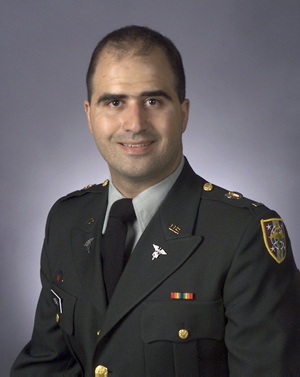 The problem with NICS checks (like the one which Hasan passed at Guns Galore) is that they lack critical information from state and local authorities. According to a Third Way report entitled “Missing Records,” “91% of those adjudicated mentally ill or involuntarily committed cannot be stopped by a gun buyer background check” because their disqualifying records are not in the system. In addition, one out of four felony conviction records are not in NICS. Third Way’s overall assessment of the database is that it is “deeply flawed.”
Would a background investigation (as opposed to a computer check) have stopped Nidal Malik Hasan from purchasing a handgun? Possibly.
There were several red flags in Hasan’s background that suggested he might have been a threat to himself or others. He had been working with service members suffering from PTSD for more than six years at Walter Reed Army Medical Center and experienced problems that required counseling.. He had also begun openly opposing America’s wars in Iraq and Afghanistan and espousing extremist Islamic views. While a senior-year psychiatric resident at Walter Reed, Hasan gave a PowerPoint presentation to mental health staff members which concluded, “It’s getting harder and harder for Muslims in the service to morally justify being in a military that seems constantly engaged against fellow Muslims.” In the Spring of 2008 and again in the Spring of 2009, key officials from Walter Reed and the Uniformed Services University of the Health Sciences met and expressed concern about Hasan's behavior, which fellow students and faculty had described as "disconnected, aloof, paranoid, belligerent and schizoid."
Finally, as described above, Hasan was being monitored by the FBI-led Joint Terrorism Task Force because of emails he had exchanged with the radical imam Anwar al-Awlaki. The FBI was also investigating whether he was behind violent anti-American comments left on a website under the screen name of "NidalHasan."
None of these warning signs were revealed by the NICS check that Hasan underwent at Guns Galore. But any or all of this information might have been uncovered by a background investigation if Hasan had had to obtain a license in order to purchase a handgun. Such investigations typically involve interviews with licensees’ family, friends, and co-workers/colleagues.
Because instant computer checks are imperfect, the U.S. Congress should adopt licensing standards for handgun purchasers similar to those enacted in New York and New Jersey. This would help ensure that dangerous individuals do not legally acquire handguns.
4) Regulate High-Powered Firearms on the Civilian Market
Hasan used a Belgian-made FN Herstal Five-seveN semi-automatic pistol during the shooting which he legally purchased at Guns Galore in Killeen. The weapon's name refers to its 5.7 mm bullet diameter. The Five-seveN is popular with U.S Secret Service agents and police SWAT teams because of its ability to penetrate body armor. It is also popular with the Mexican drug cartels, who call the Five-seveN the “Mata Policia” (“Cop Killer”).  The Legislative Director of the International Brotherhood of Police Officers, Steve Lenkhart, has called the Five-seveN "an assault rifle that fits in your pocket."
FN Herstal maintains that armor-piercing ammunition for the Five-seveN is only available to law enforcement and military personnel. However, when first launched for civilian sales, FN officials advertised that “enemy personnel, even wearing body armor can be effectively engaged up to 200 meters.” Additionally, the Brady Campaign to Prevent Gun Violence tested the Five-seveN in January 2005 with commercially-available SS192 ammunition and found that it penetrated both Level IIA and Level IIIA body armor.
The Coalition to Stop Gun Violence joined the Violence Policy Center, Brady Campaign to Prevent Gun Violence, Legal Community Against Violence, Freedom States Alliance, and States United to Prevent Gun Violence on a November 19 letter urging President Obama to use existing executive authority to prohibit the importation of the Five-seveN as well as 5.7X28mm ammunition with armor-piercing capabilities.
May 11, 2009
“The academic environment is sacred…and students need to feel safe.”
Here at Bullet Counter Points we like to highlight the exceptional work that everyday Americans are doing to prevent gun violence in their communities. Today we focus on a young man who is determined to keep America’s college campuses safe. On April 16—the second anniversary of the Virginia Tech shooting tragedy—approximately 300 students staged a “walk-out” of their classes at the University of Texas to protest a bill in the state legislature that would allow students and faculty to carry concealed weapons on campus. The students made their way to the Texas Capitol building, where they chanted in protest and rang a bell 32 times for the victims lost at Virginia Tech.
At the head of the marching students was John Woods, a Campus Leader with the group Students for Gun Free Schools (SGFS) who organized the demonstration. John is currently a graduate student at the University of Texas, but was directly affected by the shootings at Virginia Tech. He was an undergraduate at the college on April 16, 2007, and lost his girlfriend and a number of other close friends that day.
“I didn't have a choice about becoming involved,” John says. “When the shootings happened at Virginia Tech, there was no purpose to them. The people I cared about—they didn't die defending their country or their beliefs. They died for nothing.”
“I needed for there to be a purpose,” he recalls, “so I started looking at prevention. Texas lawmakers, however, started using the Virginia Tech tragedy to market concealed carry on campus. ‘The death toll could have been reduced,’ they said. From talking to survivors, though, I knew this was extremely unlikely. I knew that what the authors of the concealed carry legislation were claiming was a Hollywood fantasy.”
John resolved to organize on campus to fight HB 1893, a bill sponsored by state Rep. Joe Driver (R-Garland), who claims that allowing students to carry concealed weapons on campus would help to prevent another Virginia Tech. John was already active in Student Government at the University of Texas and found out about the organization Students for Gun Free Schools. He quickly signed up as an SGFS Campus Leader. “I organized the walk-out because I had been to a number of offices in the Capitol where they seemed completely shocked that students were against the bill,” says John. “We hoped the walk-out and rally would show them, in a very visible way, that students did not want guns on campus.” He is now organizing students to come back to the Capitol on May 11 when the Texas House of Representatives is scheduled to vote on HB 1893.
When John talks about “prevention,” he has something specific in mind: “I think gun laws in this country utterly lack common sense. Specifically, I think background checks [on gun purchasers] need to be universal.”
John also stresses that our nation’s college campuses are some of the safest places in the country, far safer than the communities that surround them. “When someone says guns on campus make faculty and students safer,” he says, “I tell them campuses are already about as safe as they can be. I tell them to talk to the survivors of the Virginia Tech shooting, who are experts on the issue. I also point out that the lack of guns on campus enables police to respond extraordinarily quickly to a crime, particularly in an active shooter situation.”
“I think it's important to note that guns are dangerous in certain circumstances. They're not allowed in football games or athletic events or in the gallery of the Texas Capitol. Why not? They can’t be carried by private citizens onto airplanes, even though the gun lobby would have us believe someone could stop a hijacking with one in the right place at the right time. Why not? And why is campus different?” With the gun lobby pushing to force universities to allow guns on campus, John says now is the time for others to get involved. “To other students, I would say this: Get existing leaders on campus involved. Student government organizations are always looking for ways to get things done so they can say to students, ‘Look, we accomplish things for you.’ Hold them to it—show them that this issue is important. Recruit volunteers from among them. Or run for a position yourself if you have to.”
John also emphasizes public education about loopholes in our current gun laws. “Most people don't think about it,” he says. “When they do, they end up wanting common sense gun laws.” John makes reference to another bill in the Texas state legislature that would make Texas (for the first time) forward mental health information to the National Instant Criminal Background Check System (NICS) to prevent deranged individuals from acquiring guns through licensed firearms dealers.
Ultimately, John sees irony in his current activism. “My precise stance on guns on campus is much like [National Rifle Association CEO] Wayne LaPierre's ten years ago,” he notes. “Schools should have absolutely zero tolerance for weapons of any kind, except in the hands of law enforcement. The academic environment is sacred, and more importantly, it's safe, and students need to feel safe.”
December 22, 2008
A Fine Example
Tragedy was averted on December 9 when police arrested 15-year-old Richard Yanis, who planned to carry out a mass shooting at his high school in Pottstown, Pennsylvania.
Yanis was going to “shoot everyone he did not like” at Pottstown High School. He planned to tell friends to leave the school’s grounds prior to opening fire on teachers and students. Montgomery County District Attorney Risa Vetri Ferman characterized the would-be school shooter as “an outcast, a loner who didn’t have many friends. He was picked on, he felt like he didn’t fit in very well.”
In preparation for the shooting, Yanis stole three handguns and ammunition from his father’s locker and gave them to a friend. The friend was to deliver the weapons to Yanis at the high school on the day of the shooting. However the plot began to unravel when Yanis’ father, Michael Yanis, reported the guns stolen to police, touching off an “intense, month-long investigation.” The friend holding the weapons soon dumped them in a river with the help of his stepmother and alerted school officials. Police intervened and quickly took Richard Yanis into custody. He has been charged with criminal attempt to commit first-degree murder.
The incident touches on a number of hot button issues regarding the role of guns in schools and the responsibilities of firearm owners...
Recent years have seen aggressive efforts by the gun lobby to push concealed weapons into America’s schools. Gun rights organizations have argued that arming teachers and allowing others to carry handguns into schools will enhance children’s safety. The Harrold School District in Texas made national news when it became the first K-12 campus in the country to allow teachers and faculty to carry concealed handguns. Defending the district’s decision, Superintendent David Thweatt stated, “When the federal government started making schools gun-free zones, that’s when all of these shootings started. Why would you put it out there that a group of people can’t defend themselves? That’s like saying ‘Sic ‘em’ to a dog.”
Not only did Thweatt ignore the facts—a recent study showed that youth ages 5-18 are over 50 times more likely to be murdered when they are away from school than at school—he also failed to consider that a better solution might be to prevent active shooter situations before they even happen. The Pottstown case demonstrates that good investigative work by police, and vigilance by school administrators, can forestall a tragedy without the need to inject guns into a learning environment.
The Pottstown incident also highlights the importance of reporting lost and stolen firearms to the police. One can imagine what might have happened had Michael Yanis failed to make that critical call to law enforcement. As District Attorney Ferman noted, Richard Yanis “had the immediate capacity to commit the crime with the guns and arsenal of ammunition waiting to be delivered upon his word.”
One might think that reporting lost and stolen guns is a common-sense thing to do. The Bureau of Alcohol, Tobacco, Firearms and Explosives (ATF) has reported, however, that “most gun owners do not report stolen firearms to the police.” In the state of Pennsylvania, Pittsburgh Police recently reported that out of 1,900 firearms recovered on crime scenes in 2007 and 2008, only 231 had been previously reported missing or stolen.
The city of Pottstown recently passed a new ordinance that requires gun owners to report lost or stolen firearms to the police. The National Rifle Association (NRA), remarkably, opposed the ordinance, stating, “It’s not going to end up lowering crime. All it ends up doing is further victimizing someone who’s been a victim of crime.” The NRA, however, has been unable to cite a single instance where a law-abiding gun owner was wrongfully prosecuted under the law in any of the seven states where it has been enacted. At a recent Pottstown City Council hearing, one local gun owner, David Blankenhorn, had a very different view: “[My pistol] turned up in a drug raid in Auburn. Because I reported it in 24 hours, because I cooperated with the law, I was given that gun back. This ordinance can have a major benefit. If you simply follow the law, it works with you.”
Hopefully, municipal officials across the country will look to Pottstown as an example of how to prevent tragedies in their schools without putting students at additional risk of gun violence.
December 8, 2008
The Unstudied Study
In September, three researchers from the University of Maryland and University of Michigan released a study that examined eleven years of data on the date and location of “every” gun show in the states of California and Texas, the nation’s two most populous states. They combined this with information on the date, location, and cause of every death occurring in these same two states during the same period. They then attempted to determine if the gun shows had an effect on gun-related deaths, with “two important caveats.” They only examined deaths that occurred within 25 miles of the gun shows, and in the four weeks immediately following their conclusion.
They concluded that the results of their study “suggest that gun shows do not increase the number of homicides or suicides and that the absence of gun show regulations does not increase the number of gun-related deaths as proponents of these regulations suggest.” The inference was that the 87% of Americans who want to close the Gun Show Loophole—which allows private individuals to sell guns at these events without conducting background checks on purchasers–are misguided.
The National Rifle Association was ecstatic, and claimed that the study “obliterates Anti-Gunners’ claims” that gun shows are “totally unregulated arms bazaars.”
The NRA’s victory dance might have been a tad premature, however. Just last week, researchers from five universities across America sent the study’s authors a formal and public letter. They had examined the study’s methodology and found it deeply flawed. Two of their main criticisms were as follows:
The geographic and time restrictions in the study reflected a poor understanding of illegal gun markets. The study only looked at gun-related deaths within a 25-mile radius of a gun show, despite evidence that a large portion of crime guns recovered are purchased either out-of-state (19.3% and 27.7%, respectively, for Texas and California in 2007) or in-state but not in the immediate vicinity (For Dallas and Los Angeles in 2000, only half of traced crime guns were recovered within 25 miles of their point of initial sale). Furthermore, the study only looked at gun-related deaths in the four weeks immediately following a gun show. In Texas and California, however, the average time from a gun’s sale to its recovery following use in crime was 9.8 and 12.9 years, respectively, in 2007.
The study failed to account for every gun show in California and Texas. The study used just one publication, the Gun and Knife Show Calendar, to identify gun shows in the two states. Additional listings in publications like the Big Show Journal, however, indicate that the study’s authors failed to identify roughly 20% of the gun shows that occurred in California and Texas during the study period.
The NRA might have also missed a story that came out of Texas just two weeks ago. Gregorio Martinez, a convicted felon, was arrested at the Bell County Gun Show in Texas after attempting to purchase an AK-47 assault rifle. Criminals don’t shop at gun shows? Martinez didn’t get the gun lobby memo. Nor did the Bureau of Alcohol, Tobacco, Firearms and Explosives (ATF), which has confirmed that gun shows are the second leading source of illegally diverted firearms in the United States (behind only corrupt federally licensed dealers).
Subscribe to:
Posts (Atom)